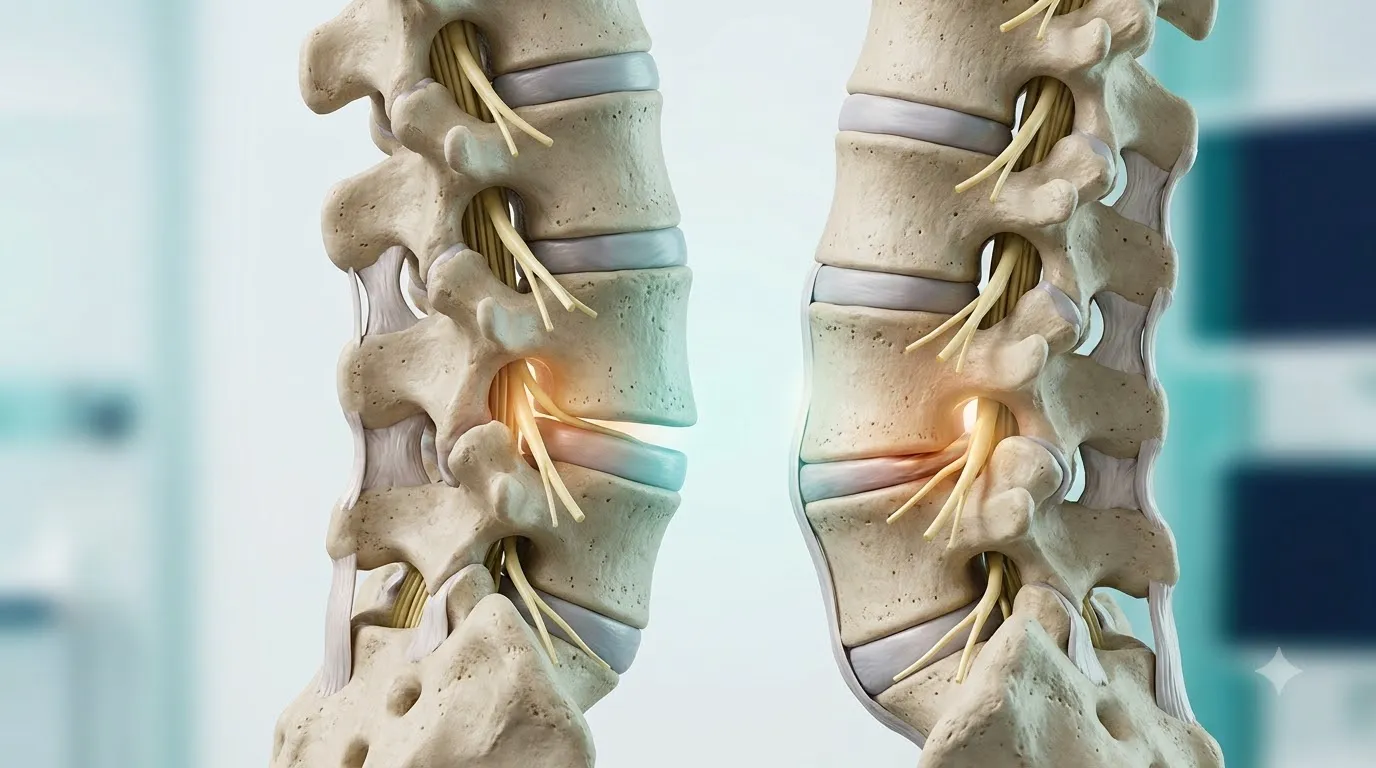
Spondylolisthesis occurs when one vertebra slips forward relative to the one beneath it, most commonly in the lower back. This slippage can narrow the spinal canal and put pressure on nearby nerve roots.
Types of Spondylolisthesis
- Isthmic spondylolisthesis — caused by a small stress fracture, often seen in younger athletes.
- Degenerative spondylolisthesis — resulting from age-related wear in the spine’s joints and discs.
- Traumatic spondylolisthesis — following an acute injury.
Symptoms
Lower back pain that worsens with standing or walking and improves with sitting, tight hamstrings, leg pain or numbness if nerves are compressed, and in more severe cases, a visible change in posture or spinal alignment.
Causes
Repetitive stress from sports, particularly gymnastics and weightlifting, is a common cause in younger patients. In older patients, natural degeneration of spinal joints and discs with age is the primary driver.
Diagnosis
Standing X-rays confirm the degree of vertebral slippage, while flexion-extension X-rays assess spinal stability during movement. MRI is used to evaluate nerve compression and disc condition.
Treatment Options
Mild cases are managed with physical therapy, activity modification, and bracing. When there is significant spinal instability, persistent pain, or nerve compression that doesn’t respond to conservative treatment, spinal fusion with instrumentation stabilizes the affected segment and relieves pressure on the nerves.
When to See a Specialist
Persistent lower back pain combined with leg symptoms, or any noticeable postural change, should be assessed by a spine specialist rather than treated as ordinary muscular back pain.