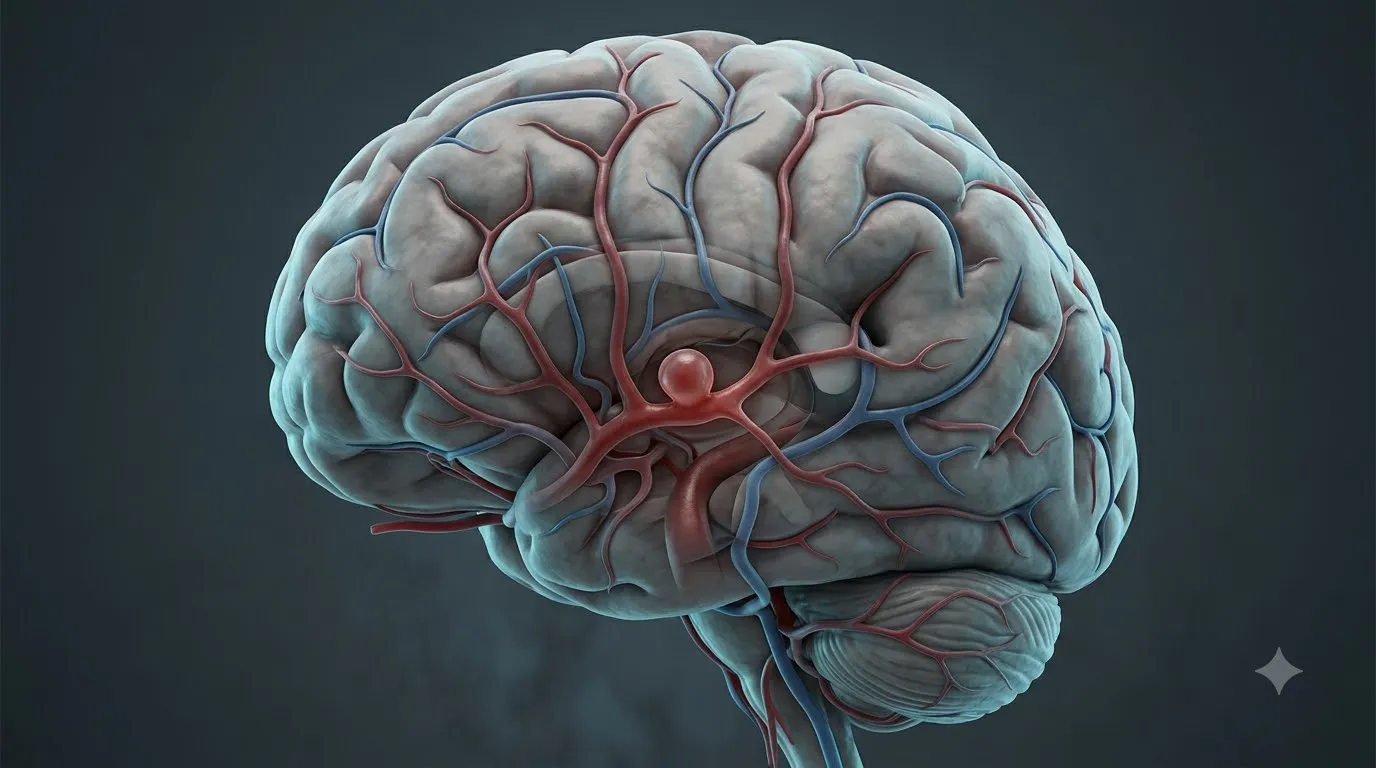
A cerebral aneurysm is a weakened area in a brain artery that forms an abnormal bulge. Many aneurysms cause no symptoms and are often discovered incidentally, but rupture can cause bleeding around the brain, requiring emergency treatment.
Symptoms of an Unruptured Aneurysm
Many aneurysms cause no symptoms, but larger ones may produce headaches, vision changes or symptoms from pressure on nearby nerves.
Symptoms of a Ruptured Aneurysm
A sudden and severe thunderclap headache, often accompanied by nausea, vomiting, neck stiffness, vision changes or loss of consciousness, may indicate aneurysm rupture and require immediate emergency medical attention.
Causes and Risk Factors
Risk factors include high blood pressure, smoking, family history, certain inherited connective tissue disorders and age-related changes that weaken blood vessel walls and increase the risk of aneurysm.
Diagnosis
CT angiography and magnetic resonance angiography (MRA) can detect cerebral aneurysms non-invasively. Digital subtraction angiography provides detailed images of blood vessels and may be used when further evaluation or treatment planning is required.
Treatment Options
Small and unruptured aneurysms with a low risk of rupture may be monitored through regular imaging. Aneurysms with higher rupture risk or those that have ruptured may require timely specialist-directed treatment.
Options include surgical clipping, which seals the aneurysm using a small clip, and endovascular coiling, a minimally invasive procedure that uses a catheter to place coils inside the aneurysm to reduce blood flow into it and lower the risk of rupture.
When to Seek Emergency Care
A sudden and severe headache, especially with neck stiffness, vomiting, vision changes, or loss of consciousness, may signal rupture and require emergency medical care.