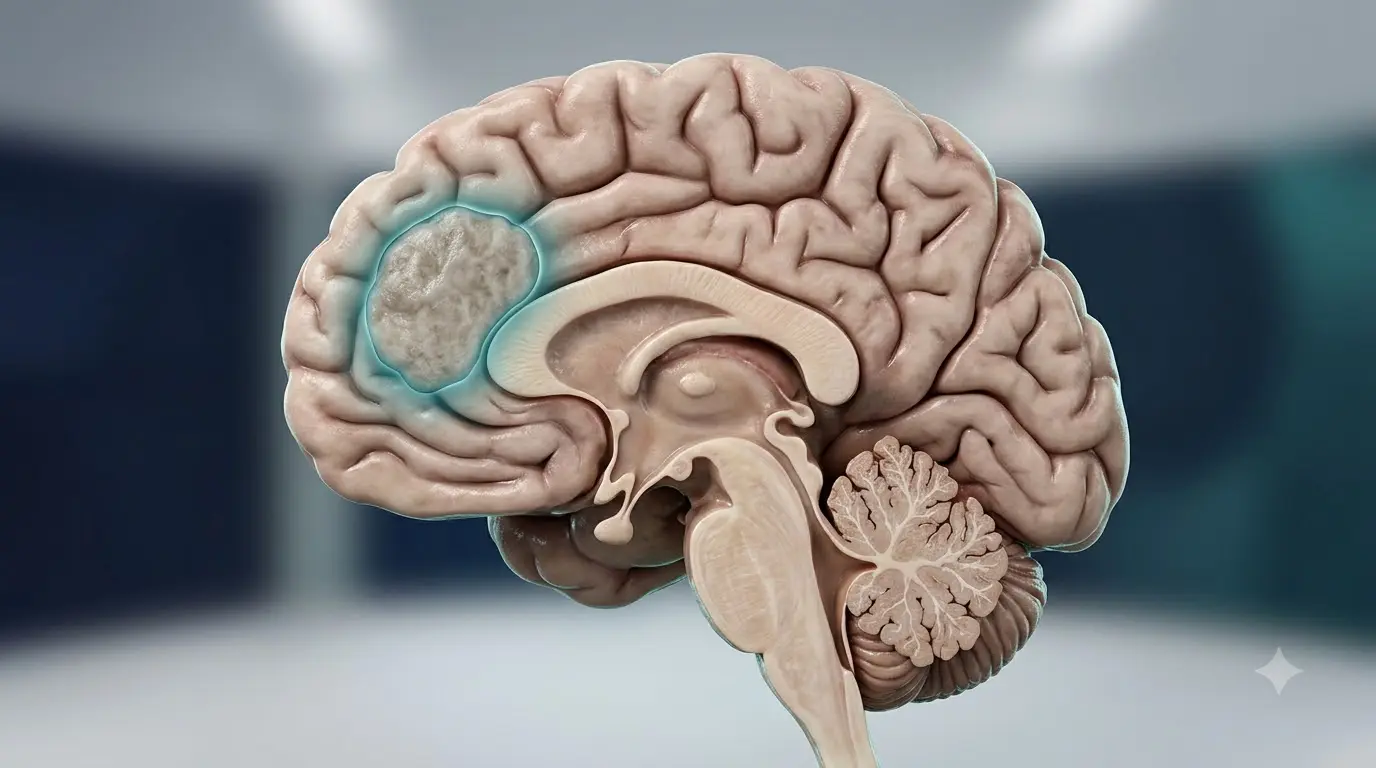
A brain tumour is an abnormal mass of cells growing within the brain or its surrounding tissue. Some are benign, meaning they grow slowly and do not spread to other parts of the body, while others are malignant and can grow aggressively, invading nearby brain tissue. Tumours can also originate elsewhere in the body and spread to the brain, known as secondary or metastatic brain tumours.
Regardless of type, any growth inside the skull can press on surrounding brain structures, which is why even benign tumours can cause significant symptoms and often require treatment.
Types of Brain Tumours
- Gliomas — tumours arising from the brain’s supportive glial cells, ranging from slow-growing to highly aggressive.
- Meningiomas — typically benign tumours arising from the membranes covering the brain and spinal cord.
- Pituitary tumours — growths in the pituitary gland that can affect hormone regulation as well as vision.
- Acoustic neuromas — benign tumours affecting the nerve connecting the ear to the brain, often causing hearing loss or balance issues.
- Metastatic tumours — cancer that has spread to the brain from another part of the body, such as the lung or breast.
Symptoms
Symptoms depend heavily on the tumour’s size, type, and location, but common warning signs include headaches that are new, progressively worsening, or worse in the morning; seizures with no prior history; vision changes, including blurred or double vision; speech difficulty or word-finding problems; gradual weakness or numbness on one side of the body; balance problems or unsteady gait; and changes in memory, personality, or cognitive function.
Causes and Risk Factors
In most cases, the exact cause of a brain tumour cannot be identified. Known risk factors include prior radiation exposure to the head, certain inherited genetic syndromes, and a family history of brain tumours. Age also plays a role, with different tumour types more common at different life stages. Despite public concern, current large-scale research does not show a clear link between mobile phone use and brain tumour risk.
Diagnosis
Diagnosis typically begins with a detailed neurological examination, followed by an MRI scan, which provides a clear picture of the tumour’s size, location, and characteristics. A CT scan may be used for initial assessment, particularly in emergency settings. In some cases, a biopsy is needed to determine whether a tumour is benign or malignant, either as a standalone procedure or during the primary surgery.
Treatment Options
Treatment is tailored to the tumour’s type, size, location, and the patient’s overall health. Surgery is the primary treatment for most accessible brain tumours, aiming to remove as much of the tumour as safely possible. Minimally invasive endoscopic surgery is used for select tumours, particularly pituitary and skull base lesions, allowing access through small openings with faster recovery. Radiation therapy is used alone or after surgery to target remaining tumour cells, particularly for malignant tumours. Chemotherapy is used for certain aggressive tumour types, often in combination with surgery and radiation. For small, slow-growing, asymptomatic tumours, active monitoring with regular imaging may be recommended instead of immediate intervention.
When to See a Neurosurgeon
Persistent or worsening headaches, new seizures, unexplained vision or speech changes, or progressive weakness should be evaluated promptly. Early diagnosis broadens treatment options and generally leads to better outcomes, so these symptoms should not be managed indefinitely without a proper neurological assessment.