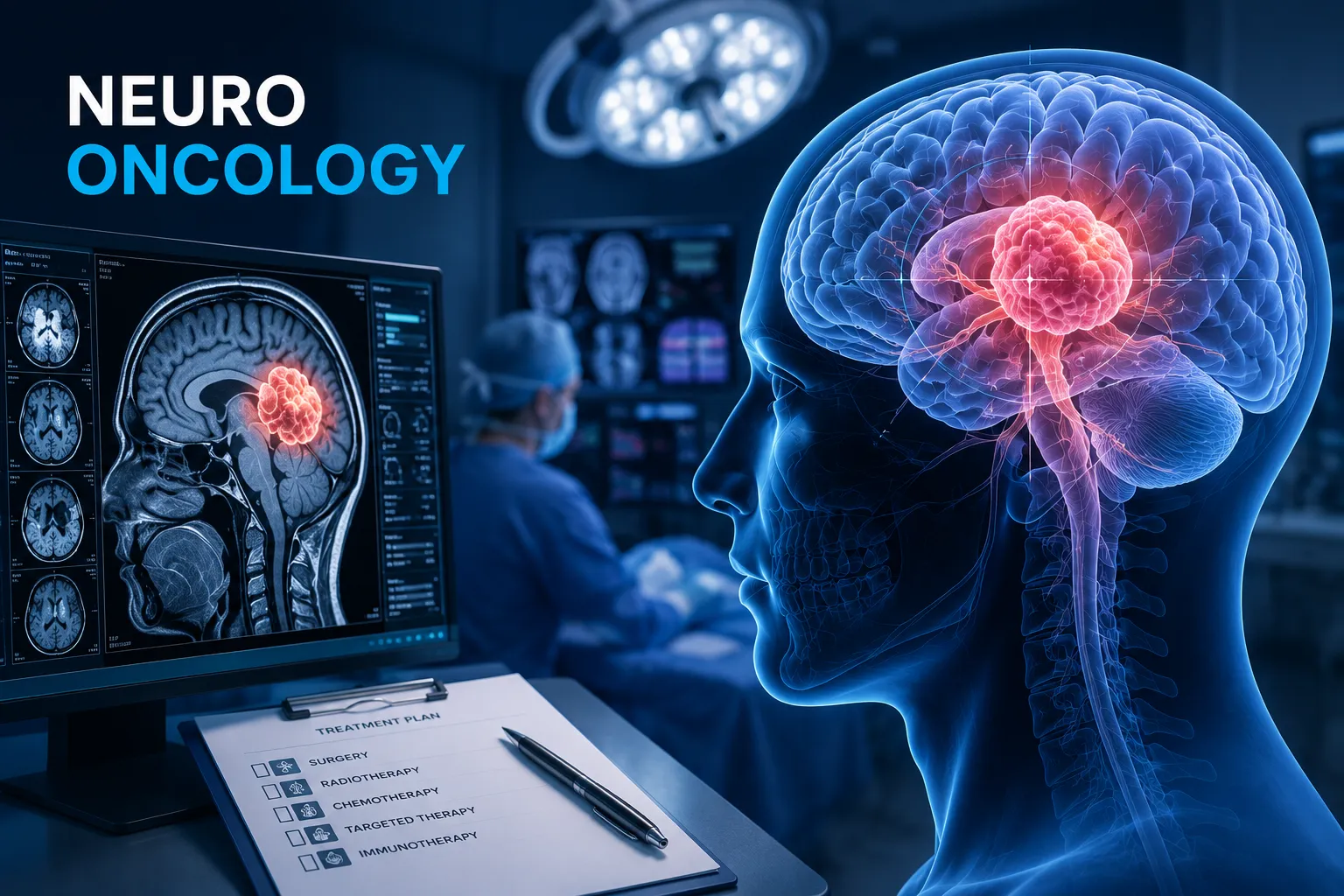
What Is Neuro Oncology?
Neuro Oncology is the field of medicine dealing with the diagnosis and treatment of brain, spinal cord, and nervous system tumours. These tumours are either benign or malignant and may arise in the brain or spinal cord themselves (primary tumours) or be caused by the transfer of cancer cells into these organs from another part of the body (secondary tumours).
As the nervous system is responsible for the functioning of such important physiological activities as motor skills, speech, memory, vision, and more, the treatment of nervous system related tumours calls for a specialized and well coordinated approach. Treatment of neuro-oncology conditions usually includes the work of many doctors specializing in different branches of medicine.
Types of Brain and Spinal Cord Tumours
Glioma Treatment is a very popular field of Neuro Oncology which consists of tumours like astrocytoma, glioblastoma multiforme, and pontine glioma. Glioblastoma Treatment is normally done by using a combination of surgery, radiotherapy, and chemotherapy due to the aggressiveness of this tumour.
There are also other tumours in the central nervous system, like ependymomas, as well as tumours located in the ventricles. The meningiomas and pituitary tumours are generally benign; however, these tumours still require special treatment if they are putting pressure on the adjacent brain structures and/or causing hormonal imbalances.
The spinal cord tumours may be extradural, intradural extramedullary and intramedullary, and they all have different approaches to surgical and oncological treatment, including Spinal Cord Tumour Treatment.
Symptoms That May Indicate a Brain or Spinal Tumour
Possible Brain Tumour Symptoms depend on the location of the tumour. Possible signs that should prompt one to consult a specialist include headaches that progress gradually, headaches associated with vomiting, newly developed seizures, problems with vision, like seeing blurred objects or double vision, weakness or numbness in the arm and legs, and difficulties with balance and speech.
When it comes to a spinal tumour, signs that are typical for such a tumour are back pain, weakness in the legs, trouble walking, and changes in controlling the bowel and bladder.
However, all these signs may be characteristic of non malignant neurologic diseases too, and they do not have to be evidence of the presence of a tumour. Only proper consultation by a specialist is needed.
Diagnosis of Brain and Spinal Tumours
Neuro-oncology diagnosis starts with taking a thorough history and carrying out a neurological assessment to check for signs and symptoms, reflexes, muscle strength, sensation, coordination, and mental status.
The imaging modality that is widely used for diagnosis of brain and spinal Tumours is MRI with contrast, although in some instances, CT can be done, especially in emergencies or when MRI cannot be performed.
Often times, a biopsy is needed to determine the type and grade of the Tumour, which is crucial in planning for treatment. Based on the location of the Tumour, other diagnostic modalities like spinal MRI, lumbar puncture, or lab tests might be needed.
Treatment Options in Neuro-Oncology
Treatment in neuro-oncology is customized depending on the nature, grade, site of the Tumour, and general health of the patient.
- Neurosurgery: The initial treatment option where the aim is to remove as much of the Tumour as possible while minimizing damage to normal neuro functions.
- Radiotherapy: It is employed in controlling Tumour growth and treating Tumours which cannot be surgically removed completely.
- Chemotherapy: This entails drug treatment and is specifically employed in some Tumour types like high-grade gliomas and some metastatic Tumours.
- Corticosteroids: These are drugs used to help reduce swelling associated with brain Tumours and symptoms caused by increased intracranial pressure.
Brain Tumour Treatment or Brain Cancer Treatment can involve any one or a combination of the above treatment methods.
Neurosurgical Treatment for Brain and Spinal Tumours
In Neuro Oncology Surgeon practice, the surgeon seeks to eliminate tumour cells while preserving the essential function of the brain and spine, including motor function, speech, vision, and sensory perception.
In Brain Tumour Surgery Kerala, cutting edge technologies including neuro navigation systems, intraoperative neuromonitoring, operating microscopes, and minimally invasive/endoscopic surgeries can be employed in situations where this is feasible.
Complete tumour removal is not always possible due to tumours’ locations near important neurological structures. When this happens, a tumour biopsy operation alone may be performed in order to collect tissue specimens for diagnosis and further tumour treatments through radiation or chemotherapy.
Recovery and Follow-Up Care
The nature of recovery from a brain tumour depends on the kind of brain tumour, kind of treatment administered, and pre treatment neurological state.
Post-surgery, monitoring of neurological functioning, pain control, and wound healing occurs in a hospital setting. In some instances, physiotherapy, occupational therapy, speech therapy, or neuro rehabilitation can assist in recovery of muscle strength, mobility, speech, and other functional capacities.
Regular MRI scans are an integral component of ongoing care for detection of tumour regrowth or progression and treatment effects. Follow-up care is generally managed by neurosurgery, medical oncology, radiation oncology, and other supportive care teams.
When Should You Consult a Neuro Oncologist?
In case you experience persistent or increasingly severe headaches, seizures without prior history, weakness, numbness, lack of balance or coordination, or when an MRI or CT scan suggests the presence of a brain or spinal lesion, then you must consider visiting a Neuro Oncologist.
Those people who suffer from cancer and who develop new neurological problems need to be evaluated too because these new problems could suggest metastasis to the brain/spine.
In case patients are looking for Neuro Oncology Kochi services, Dr. Arun Oommen provides evaluation, diagnosis, and treatment planning for brain and spinal Tumours.
Any concern regarding brain or spinal Tumours should be evaluated by a specialist.
Frequently Asked Questions
What is the survival rate for Glioblastoma Treatment?
It is dependent on age, genetic factors related to the Tumour, the amount of surgery performed, and the response to radiation therapy and chemotherapy. Your treating neurosurgeon can help with details specific to your condition.
Can Spinal Cord Tumour Treatment be done without surgery?
Yes. There may be some options like radiation therapy, chemotherapy, or simply observation of the Tumour, depending upon the type, size, symptoms, and location of the Tumour.
How long does recovery take after Brain Tumour Treatment?
It depends on how complicated the surgery is, the location of the Tumour, and whether the patient needs any rehabilitation.
Where can I find a trusted Neuro Oncologist in Kochi?
Neuro-oncology is a specialised field of care in Kochi, with Dr. Arun Oommen practising in this area.