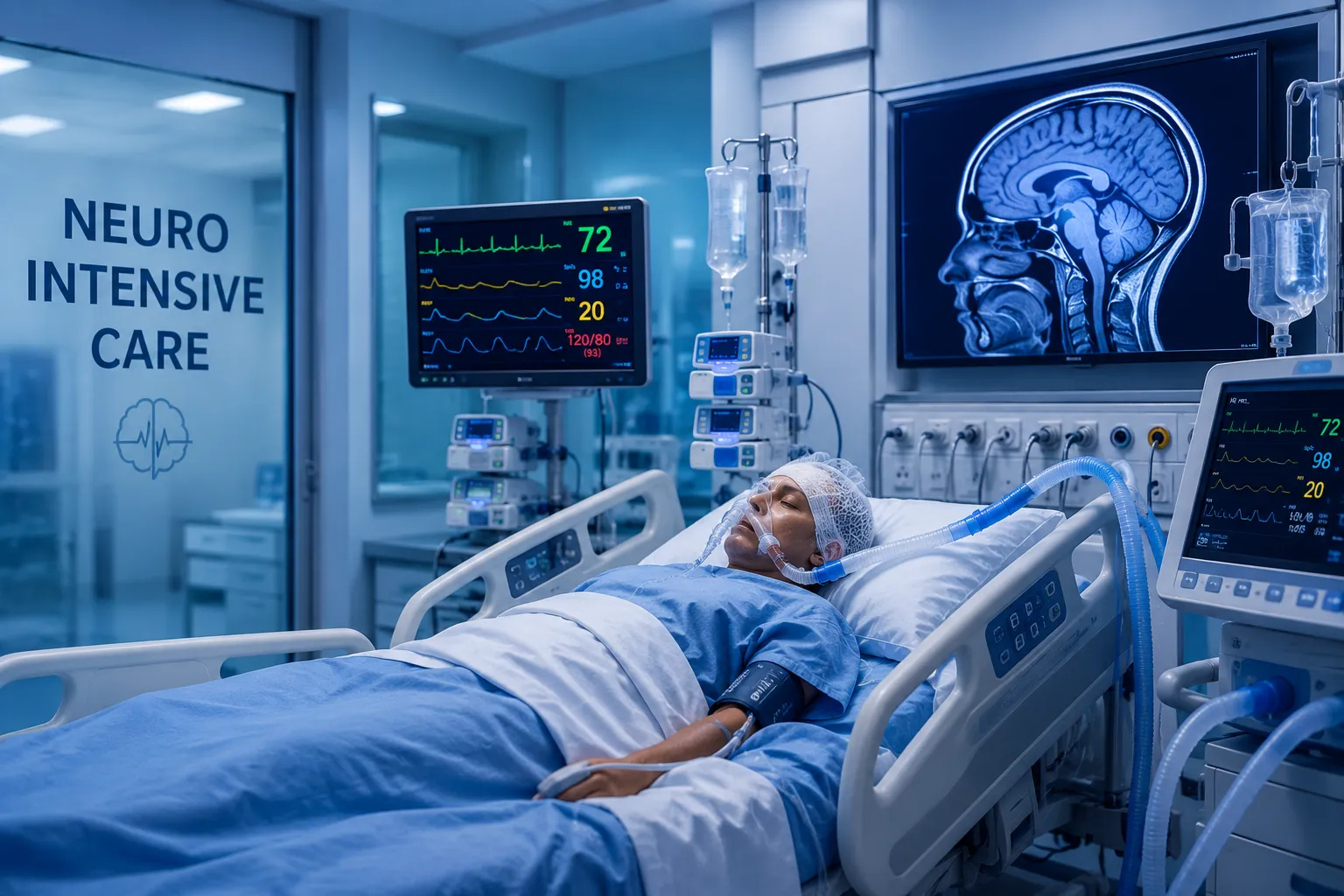
What Is Neuro Intensive Care?
Neuro Intensive Care, or Neurocritical Care, is a highly specialized form of intensive care medicine that focuses on caring for individuals with life threatening problems in their brain, spinal cord, or nervous system.
A patient who is brought into a neuro ICU will be either unconscious, extremely weak/paralyzed, having convulsions, or even on a ventilator because he/she is unable to breathe normally.
Neuro Intensive Care requires constant neurological observation and immediate expert attention, both of which are not provided in an ordinary ICU. Neuro Intensive Care facilities are available in Kochi.
Conditions Treated in the Neuro ICU
The Neuro ICU treats many kinds of neurosurgical and neurological crises and complications.
- Subarachnoid, intracerebral, and subdural haemorrhage: Brain bleeding of these types is caused by an aneurysm, brain damage, or uncontrolled hypertension, and demands prompt Brain Haemorrhage Treatment.
- Traumatic brain injury (TBI): Brain swelling, bleeding, or loss of consciousness resulting from a fall, road traffic accident, a sports accident, or another type of trauma demands specialised Traumatic Brain Injury Treatment.
- Stroke: Ischemic and haemorrhagic strokes can be treated in an ICU as time-sensitive conditions.
- Brain tumours: Patients might need close observation after neurosurgery or after episodes of acute neurological deterioration.
- Status epilepticus: Uncontrolled prolonged seizures demand immediate emergency treatment and monitoring.
- Neuromuscular crises: Guillain Barre syndrome or myasthenia gravis might cause weakening of the breathing muscles and require mechanical ventilation.
- Infections: Serious brain or spinal cord infections such as meningitis, encephalitis, or brain abscesses demand close monitoring because they can rapidly affect consciousness and neurological function.
- Spinal cord injury: It can be either traumatic or non-traumatic, leading to compression and damage of the spinal cord.
Treatment strategies for these diseases are different and are chosen depending on the diagnosis, imaging results, and the patient’s general medical condition.
How Neuro ICU Care Works
Neuro Intensive Care monitors patients for alterations in level of consciousness, pupils, breathing, pulse rate, blood pressure, and neurological status.
The special equipment that might be used includes an intracranial pressure monitor to detect brain swelling, an EEG monitor to detect seizures, and a ventilator for those who are unable to breathe on their own.
Neuro Intensive Care is managed by a Neurointensivist in coordination with neurosurgeons, neurologists, critical care specialists, special ICU nurses, and respiratory therapists. Neurological emergencies require urgent intervention because of their rapidly changing nature.
Recognizing a Neurological Emergency
Quick identification of any neurological emergency could help improve prognosis and avoid disability in many cases.
One should visit the emergency room immediately in the following circumstances:
- Sudden weakness or numbness in the face, arm, or leg, especially if this happens on only one side of the body.
- Sudden confusion or inability to speak normally or even understand what is being said.
- Sudden severe headache, especially if it feels like the “worst headache of my life,” since this condition requires urgent Stroke ICU Care due to possible bleeding in the brain.
- Unconsciousness, falling down, or seizures in individuals with no previous experience of having seizures or epilepsy.
- Concussion accompanied by excessive sleepiness, frequent vomiting, disorientation, abnormal behaviour, and a growing headache.
Conditions such as stroke, brain haemorrhage, concussion, or other neurological emergencies might cause the above-mentioned symptoms, and in case of necessity, one should visit Emergency Neurosurgery Kochi right away.
Treatment Approaches in Neurocritical Care
Neurocritical Care treatment depends on the patient’s underlying neurological disease as well as the severity of his or her illness.
- Surgical interventions: Emergency surgeries may include the removal of the brain haemorrhage, decompression to release brain pressure, removal of blood clots, or aneurysm repair as a component of Subarachnoid Haemorrhage Treatment.
- Medical interventions: Strict regulation of the patient’s blood pressure, blood glucose level, body temperature, brain swelling, and seizures may be necessary to preserve the brain.
- Ventilation and airway support: If the patient cannot maintain sufficient breathing and airway control, he or she may need to use a ventilator and sedation.
- Coma Care: This treatment program is designed for patients with decreased consciousness or coma, involving neurological examinations, complications prevention, nutrition, and early rehabilitation preparation.
- Constant monitoring for complications: Patients are monitored for possible complications such as vasospasm after aneurysm rupture, new bleeding, seizures, infection, and increased intracranial pressure, allowing these problems to be treated early.
All of these programs are customised based on the patient’s diagnosis, neurological condition, imaging studies, and general health condition.
Recovery and Support for Patients and Families
Recovery from neurological critical illness can vary significantly based on the type of illness, its severity, age of the patient, and any other medical issues that are present.
Some people will have only a short stay in Neuro Intensive Care, while others will need to stay in the ICU for longer periods before being moved to step-down wards and rehabilitation.
As patients recover from their illness, the emphasis starts shifting from life saving measures to mobility, language, swallowing, memory, and functional ability.
The family of the patient is updated regularly regarding the patient’s condition as a regular practice in Neuro ICU Kochi care.
Frequently Asked Questions
How long does a patient typically stay in the Neuro ICU?
It depends entirely on the patient’s condition. Some patients stay only for 24–48 hours, whereas others might need days or even weeks for treatment and observation.
What is the difference between a regular ICU and a Neuro ICU?
A Neuro ICU specialises in all kinds of brain and spinal cord emergencies. It offers special neurological monitoring, neurosurgical assistance, electroencephalographic monitoring, and Neurocritical Care, which might not be available in a general ICU.
Can family members visit patients in the Neuro ICU?
Yes. The visiting time of patients in the Neuro ICU is decided by the hospital according to its ICU policy, although there might be some restrictions regarding the timing and number of visits.
What happens after a patient is stable enough to leave the ICU?
After stabilisation of the patient’s condition, the patient is shifted to either a high dependency unit or to the neurology or neurosurgery ward of the hospital.
Where is emergency Neuro Intensive Care available in Kochi?
Emergency neuro-intensive care and neurocritical care are specialised areas of neurological care in Kochi.