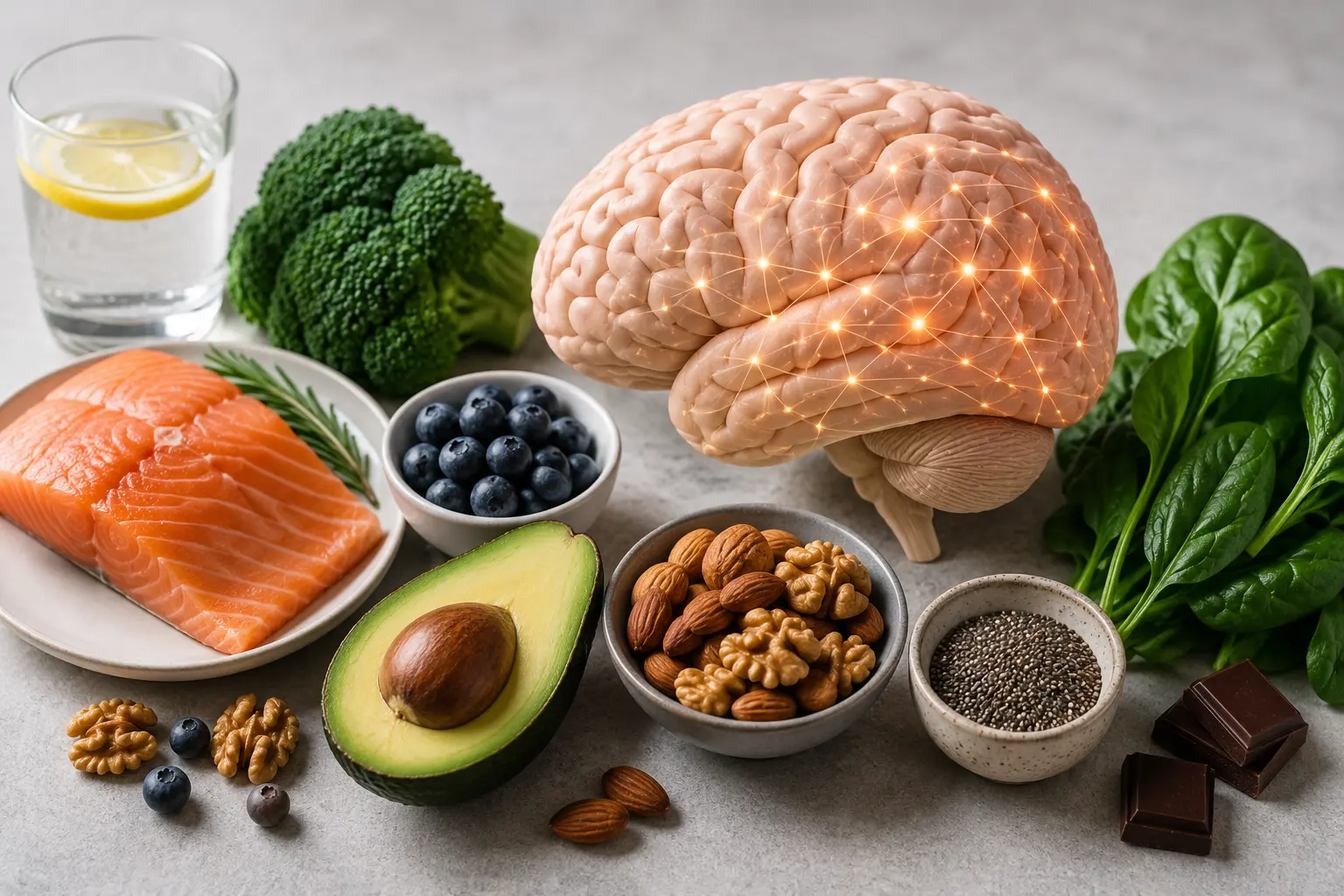
The brain accounts for only about two percent of body weight but consumes roughly twenty percent of the body’s energy. What you eat directly shapes how well that energy-hungry organ functions, from day-to-day mental clarity to long-term resilience against cognitive decline and nerve-related conditions.
Key Nutrients for Brain and Nerve Health
Omega-3 fatty acids, found in fatty fish, walnuts, and flaxseed, are a core structural component of brain cell membranes and play a role in reducing inflammation throughout the nervous system.
B vitamins, particularly B6, B12, and folate, support nerve function and the production of neurotransmitters, the chemical messengers that allow neurons to communicate.
Antioxidants, found in colorful fruits and vegetables, help protect brain cells from oxidative stress, a process linked to aging and cognitive decline.
Magnesium, found in leafy greens, nuts, and whole grains, supports healthy nerve signaling and has been linked to reduced headache and migraine frequency in some individuals.
Adequate hydration is essential for maintaining normal cognitive function; even mild dehydration measurably impairs concentration and is a well-established headache trigger.
Foods That Can Work Against Brain Health
- Excess added sugar, linked to inflammation and blood sugar swings that affect concentration
- Highly processed foods low in nutrients and high in unhealthy fats
- Excessive alcohol consumption, which affects both short and long-term cognitive function
- Trans fats, associated with increased inflammation
- Chronic under-hydration, often overlooked as a factor in fatigue and headaches
Myths About Nutrition and Brain Health
Myth 1: A single “superfood” can dramatically boost brain function.
No single food delivers dramatic cognitive benefits on its own. Consistent, balanced nutrition over time matters far more than any individual ingredient.
Myth 2: Supplements are just as effective as getting nutrients from food.
Whole foods provide nutrients in combinations that support better absorption and function than isolated supplements typically do, though supplements can help address specific, diagnosed deficiencies.
Myth 3: Skipping meals to lose weight doesn’t affect brain function.
Skipped meals cause blood sugar fluctuations that directly impair concentration, mood, and energy, effects that are often mistaken for unrelated fatigue.
Myth 4: Fat is universally bad for the brain.
Healthy fats, particularly omega-3s, are essential structural components of brain tissue. The concern is specifically trans fats and excessive saturated fat, not dietary fat as a category.
Myth 5: Caffeine is purely harmful to brain health.
Moderate caffeine intake has been associated with some cognitive benefits for many people. Problems tend to arise from excessive intake or from caffeine disrupting sleep.
Seven Tips for Brain-Healthy Eating
- Include fatty fish, walnuts, or flaxseed in your diet a few times a week.
- Eat a wide variety of colorful fruits and vegetables for antioxidant diversity.
- Stay consistently hydrated throughout the day.
- Limit added sugar and highly processed foods where possible.
- Don’t skip meals, since consistent blood sugar supports consistent focus.
- Choose whole grains and leafy greens for magnesium and B vitamins.
- Moderate alcohol and caffeine intake rather than eliminating or overusing either.